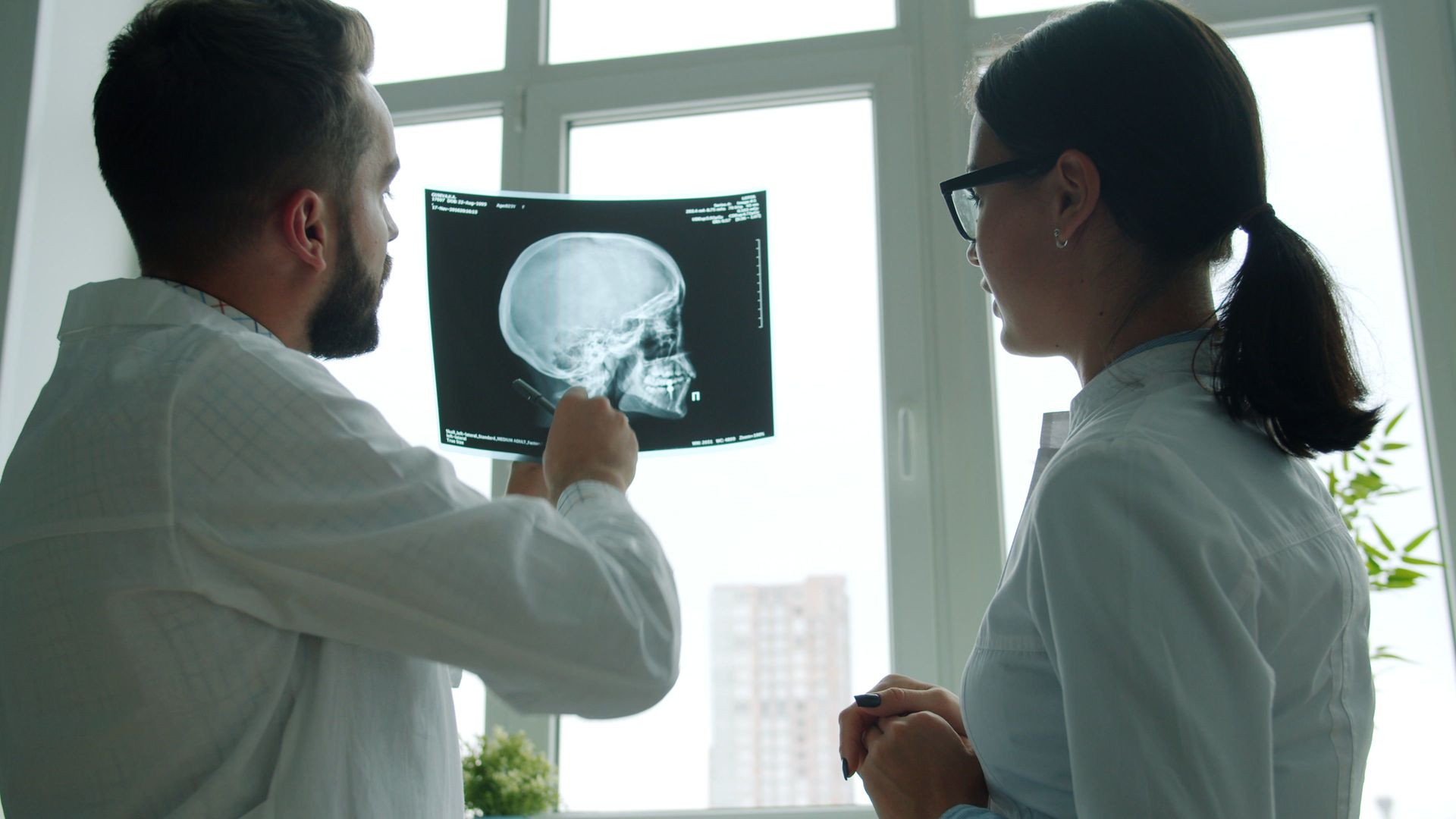
What Is XLIF Surgery? A Guide to Extreme Lateral Interbody Fusion
When back pain, nerve symptoms, or spinal instability continue despite nonsurgical treatment, a spine specialist may discuss surgical options. One procedure you may hear about is XLIF, which stands for extreme lateral interbody fusion.
Unlike approaches that access the spine from the front or back, XLIF reaches the disc space through the side of the body. Dr. Frank Kuwamura of MD Spine Care explains how the procedure uses imaging to identify the surgical target and a specialized working corridor to access the spine.
Watch: Dr. Kuwamura Explains XLIF Surgery
In this video, Dr. Kuwamura explains the meaning of XLIF, why patients are positioned on their side, and how imaging helps the surgeon identify the area that needs treatment. He also describes how a tubular working corridor provides access to the targeted disc space.
XLIF is a specialized form of lateral lumbar interbody fusion. The goal is to reach a selected disc space from the side, remove the affected disc, and place an implant to help support fusion between the adjacent vertebrae. Additional fixation may be used when needed.
What Does XLIF Stand For?
XLIF stands for extreme lateral interbody fusion. It is a type of lumbar spinal fusion that uses a lateral, or side-of-the-body, approach to reach the disc space between two vertebrae.
To understand the name, it helps to break it down:
Extreme lateral
The surgeon approaches the selected spinal disc space from the side rather than through a traditional front or back approach.
Interbody
The treatment focuses on the disc space between two adjacent vertebrae.
Fusion
The procedure aims to help two neighboring vertebrae grow together into one stable segment over time.
Specialized access
The lateral route uses specialized instruments and surgical planning to reach the intended disc space.
XLIF is also discussed within the broader category of lateral lumbar interbody fusion, or LLIF. The term XLIF is associated with a particular surgical system and technique. The exact approach, equipment, and additional stabilization used can vary by patient and surgeon.
How Does XLIF Surgery Work?
XLIF is performed in an operating room under anesthesia. The patient is typically positioned on their side so the surgeon can reach the selected lumbar disc space through a lateral approach.
Step 1: Identify the target
Before surgery, the surgeon reviews the patient's symptoms, physical examination findings, and imaging studies. These details help identify the spinal level that may be contributing to the problem and determine whether a lateral approach is appropriate.
Step 2: Position the patient and use imaging
The patient is positioned on their side. Imaging, often including intraoperative X-ray guidance, helps the surgical team confirm the location of the intended disc space. Depending on the technique, nerve monitoring may also be used to help identify and protect nearby nerves.
Step 3: Create a working corridor
The surgeon makes a small incision on the side of the body and uses specialized instruments to create a path to the disc space. A tubular or retractor-based working corridor helps provide access to the surgical target.
This approach is designed to reduce disruption to certain muscles and tissues compared with some traditional approaches. However, the instruments still pass through tissue, and the lateral route has its own anatomical considerations and risks.
Step 4: Treat the affected disc space
The damaged disc is removed from the targeted space. The surgeon then places an interbody implant, often containing or used with bone graft material, to help restore disc-space height and support fusion between the adjacent vertebrae.
Step 5: Add stabilization when needed
Depending on the patient's condition and surgical plan, additional screws, rods, or other fixation may be used to help stabilize the spine while fusion develops.
Step 6: Allow the fusion to develop
Fusion is a biological process that takes time. Bone gradually grows across the treated segment. Follow-up appointments and imaging may be used to assess healing and the stability of the treated area.
Why Imaging and Surgical Planning Matter in XLIF
As Dr. Kuwamura explains, selecting the surgical target involves more than locating a painful area. Symptoms, physical examination findings, and objective studies such as MRI or CT scans help the surgeon evaluate the underlying spinal problem.
MRI and CT scans
MRI can provide detailed views of discs, nerves, and other soft tissues. CT scans can help show bone anatomy and structural changes. The appropriate study depends on the clinical question and the information needed for surgical planning.
Intraoperative imaging
Imaging during surgery helps the team confirm the location of the targeted spinal level and guide instrument placement. The details depend on the procedure and the equipment being used.
Nerve monitoring
The lateral approach passes through an area near nerves that supply the legs. Neuromonitoring may be used during XLIF to provide information about nearby nerve structures and help the surgeon navigate the approach. Monitoring can reduce certain risks, but it cannot eliminate the possibility of nerve injury.
The combination of careful preoperative planning, appropriate imaging, surgical technique, and monitoring is important because the lumbar spine contains sensitive neural structures and nearby muscles, vessels, and other tissues.
What Conditions May Be Treated With XLIF?
XLIF may be considered for selected conditions affecting the lumbar spine when a fusion procedure is appropriate. The decision depends on the cause of symptoms, the spinal level involved, the patient's anatomy, and whether nonsurgical treatment has been sufficient.
Degenerative disc disease
Spinal discs can lose height and change in structure over time. In selected cases where a disc problem contributes to symptoms and a fusion is appropriate, a lateral interbody procedure may be considered.
Spondylolisthesis
Spondylolisthesis occurs when one vertebra shifts relative to another. Some forms of degenerative spondylolisthesis may be treated with spinal fusion when symptoms and instability warrant surgery.
Selected cases of spinal stenosis
Spinal stenosis is a narrowing of spaces within the spine that can put pressure on nerves. In certain patients, restoring disc-space height through a fusion procedure may help relieve some types of nerve compression. Other patients may need a different approach or direct decompression.
Degenerative scoliosis and spinal alignment problems
Some patients develop changes in spinal alignment as discs and joints degenerate. A lateral interbody procedure may be one component of a surgical plan for selected cases, depending on the degree of deformity and the patient's overall spinal anatomy.
These examples do not mean that everyone with one of these conditions needs XLIF. A specialist must determine whether surgery is warranted and whether the lateral approach can adequately address the problem.
XLIF vs. Traditional Spinal Fusion: What Is the Difference?
One important difference is the route used to reach the disc space. Some spinal fusion procedures approach the spine from the back, while others access it through the abdomen. XLIF approaches the lumbar disc space from the side.
The lateral route may allow the surgeon to avoid some of the muscle dissection associated with certain posterior approaches. However, it passes through a different anatomical corridor and introduces its own considerations, particularly the nearby nerves involved in leg function.
The best approach is not necessarily the one with the smallest incision. It is the approach that can address the patient's specific spinal problem while balancing potential benefits, limitations, and risks.
Depending on the condition, other options may include continued nonsurgical care, a different decompression procedure, or another type of fusion. Your surgeon should explain why a particular procedure is being recommended and what alternatives may be reasonable.
What Are the Potential Benefits of XLIF Surgery?
For appropriately selected patients, the lateral approach may offer advantages related to surgical access and tissue disruption. The benefits vary by diagnosis, procedure, and individual circumstances.
- Side access to the disc: The surgeon reaches the targeted disc space through the side of the body.
- Less disruption to certain back muscles: The approach may avoid some of the muscle dissection used in traditional posterior surgery.
- Disc-space restoration: The interbody implant may help restore height in the treated disc space when appropriate.
- Potential indirect decompression: Restoring disc height may increase space around certain nerve structures in selected cases.
- Potential recovery advantages: Some patients may benefit from less tissue disruption, although recovery varies substantially.
These are potential benefits, not guarantees. XLIF may not directly relieve every type of nerve compression, and some patients require an additional procedure. Your surgeon should explain the expected benefit in relation to your specific diagnosis.
What Are the Risks and Limitations of XLIF?
XLIF is a major spinal procedure, even when performed through a minimally invasive approach. As with other surgeries, complications can occur, and the potential risks should be discussed before treatment.
- Nerve irritation or injury: The lateral route passes near nerves that supply the legs and hip muscles. Symptoms may include numbness, tingling, pain, or weakness.
- Muscle-related symptoms: Discomfort or weakness involving the hip flexors or thigh can occur after the lateral approach.
- Bleeding or blood vessel injury: Nearby structures can be injured during surgery.
- Infection: Infection can occur at the surgical site or deeper tissues.
- Failure of fusion: The treated vertebrae may not unite as intended, sometimes requiring further treatment.
- Implant or hardware complications: Implants may shift, loosen, or otherwise cause problems.
- Persistent symptoms: Surgery may not completely relieve pain or other symptoms.
- Additional surgery: Some patients require further decompression, stabilization, or revision procedures.
XLIF also has anatomical limitations. It is not suitable for every spinal level or every pattern of disease. For example, the lowest lumbar disc space at L5-S1 is generally not accessible through the standard lateral transpsoas route because of the surrounding pelvic anatomy.
A detailed evaluation helps determine whether the lateral approach is feasible and whether another procedure may be more appropriate.
Who May Be a Candidate for XLIF Surgery?
Candidacy is determined individually. A surgeon considers the patient's symptoms, physical examination, imaging, medical history, overall health, and the specific spinal condition being treated.
During an evaluation, your surgeon may review:
- Whether your symptoms are consistent with the spinal problem seen on imaging.
- Whether instability, degeneration, or another structural issue may be contributing to symptoms.
- Whether nonsurgical treatment has been appropriate and sufficiently attempted.
- Whether a fusion procedure is likely to address the problem.
- Whether the affected spinal level and your anatomy are suitable for a lateral approach.
- Whether additional decompression or stabilization may be needed.
- How your general health may affect surgery, bone healing, and recovery.
Not everyone with back pain needs surgery. Depending on the diagnosis, nonsurgical options may include physical therapy, activity modification, medication, or selected injections. If surgery is considered, understanding the available approaches can help you make a more informed decision.
What Is Recovery Like After XLIF Surgery?
Recovery depends on the number of spinal levels treated, whether additional procedures are performed, the patient's health, and the body's response to surgery. There is no single timeline that applies to every patient.
Immediately after surgery
The care team monitors the patient as they recover from anesthesia and checks pain control, movement, and other aspects of recovery. Walking may begin early when the surgical team determines it is safe.
Returning home and resuming activities
Some patients leave the hospital relatively quickly, while others need a longer stay depending on their circumstances and the extent of surgery. Instructions may cover wound care, medications, walking, lifting restrictions, and follow-up visits.
Bone fusion takes time
Although the skin incision begins healing earlier, fusion between the vertebrae develops over a longer period. Follow-up appointments help the surgeon assess symptoms, recovery, and evidence of fusion.
Follow your individualized recovery plan
Do not return to heavy lifting, strenuous exercise, driving, or other restricted activities until your surgical team says it is appropriate. Contact your care team promptly if you develop new or worsening leg weakness, increasing numbness, fever, wound drainage, or other concerning symptoms.
Questions to Ask Before Considering XLIF
If your surgeon recommends XLIF, you should understand why the procedure is being considered and how it compares with other options. These questions can help guide the discussion:
- What specific condition is the surgery intended to treat?
- How do my symptoms, examination, and imaging support this recommendation?
- Why is a lateral approach appropriate for my spinal level and anatomy?
- Will I need additional screws, rods, or another decompression procedure?
- What are the potential benefits and risks in my particular case?
- What nonsurgical or alternative surgical options should I consider?
- What restrictions and follow-up will I need during recovery?
- How will the surgical team assess whether the fusion is progressing?
A second opinion can also help if you are uncertain about the recommended procedure or want to understand alternative approaches before deciding.
Learn More About XLIF Surgery in San Antonio, TX
If you are exploring surgical options for a lumbar spine condition, learning how each procedure works can help you prepare for a conversation with your surgeon. XLIF is one approach that may be suitable for selected patients, but the right treatment depends on the underlying diagnosis and individual anatomy.
MD Spine Care provides evaluation and treatment planning for back and neck conditions in the San Antonio area. To learn more about extreme lateral interbody fusion, visit the dedicated XLIF procedure page.
A consultation can help clarify what your imaging shows, which treatments may be appropriate, and whether XLIF or another approach fits your needs.
Frequently Asked Questions About XLIF Surgery
1. What does XLIF stand for?
XLIF stands for extreme lateral interbody fusion. It is a type of lumbar spinal fusion that accesses the disc space from the side of the body.
2. Is XLIF considered minimally invasive spine surgery?
Yes. XLIF uses a lateral approach designed to reduce disruption to certain surrounding tissues compared with some traditional approaches. It remains a significant spinal operation with specific risks and limitations.
3. What conditions can XLIF treat?
XLIF may be considered for selected cases of degenerative disc disease, spondylolisthesis, spinal stenosis, and degenerative spinal deformity when a fusion procedure is appropriate.
4. Why is the patient positioned on their side during XLIF?
Side positioning allows the surgeon to approach the targeted lumbar disc space from the lateral side of the body rather than through a traditional front or back route.
5. Does XLIF avoid all muscle and tissue damage?
No. XLIF is designed to limit disruption to certain tissues, particularly some of the major back muscles affected by other approaches. The procedure still passes through tissue and carries risks, including possible nerve and muscle-related complications.
6. How long does it take to recover from XLIF?
Recovery varies depending on the procedure, the number of levels treated, the patient's health, and the healing process. Bone fusion takes longer than the initial healing of the incision. Your surgeon can provide a recovery plan based on your case.
7. Is XLIF appropriate for every lumbar disc problem?
No. The lateral approach is not suitable for every spinal level, anatomical pattern, or condition. A surgeon must review symptoms, imaging, and the patient's anatomy to determine whether XLIF or another procedure is appropriate.
8. Where can I learn about XLIF surgery in San Antonio, TX?
Visit the MD Spine Care XLIF procedure page for more information, or contact the practice to discuss an evaluation.
Considering XLIF or Another Spine Surgery Option?
Understanding the procedure, its potential benefits, and its limitations is an important part of making an informed decision. An individualized evaluation can help determine which options may be appropriate for your spinal condition.
Explore the XLIF Procedure Request an EvaluationMD Spine Care • San Antonio, Texas • (210) 640-9048
Medical disclaimer: This article is for educational purposes only and is not a substitute for medical advice, diagnosis, or treatment. XLIF is appropriate only for selected patients and carries potential risks. Surgical approach, expected benefits, and recovery vary by individual. Discuss your specific condition and treatment options with a qualified spine surgeon.