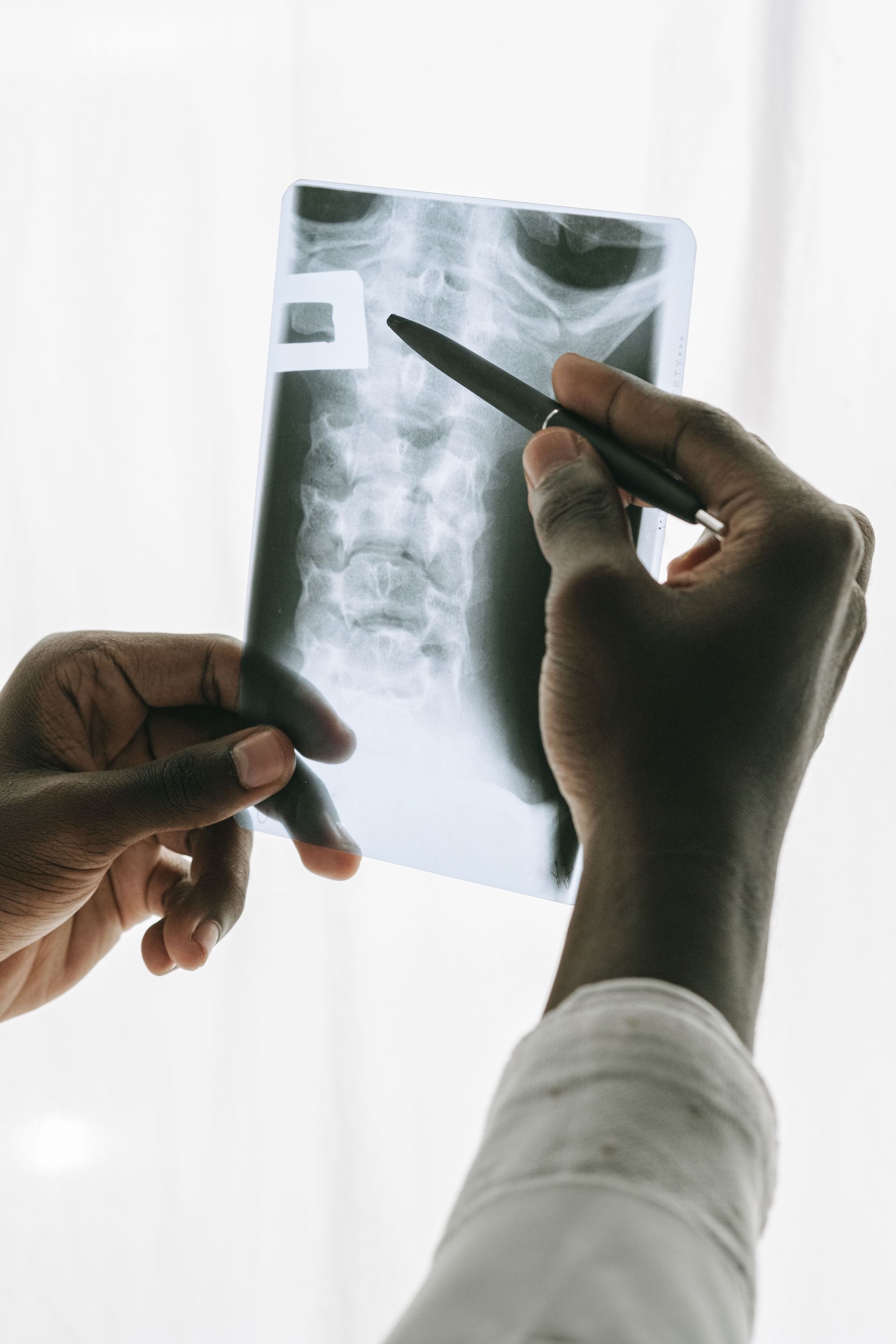
Exercises for Spinal Stenosis: Improving Mobility and Reducing Discomfort
Spinal Stenosis Exercises
Spinal stenosis can make everyday movements more difficult due to pressure on the nerves in the spine. While treatment varies depending on the severity of the condition, certain exercises may help improve flexibility, support the spine, and reduce discomfort.
If you’re experiencing symptoms in San Antonio, understanding which movements are generally recommended—and which to avoid—can help you manage symptoms more effectively.
What Is Spinal Stenosis?
Spinal stenosis occurs when the spaces within the spine narrow, placing pressure on nearby nerves. This can lead to symptoms such as pain, tingling, numbness, or weakness in the back, legs, or arms.
Exercise is often part of a broader approach to managing symptoms, especially in mild to moderate cases.
Benefits of Exercise for Spinal Stenosis
Appropriate exercises may help:
- Improve flexibility and range of motion
- Strengthen muscles that support the spine
- Promote better posture
- Reduce pressure on spinal nerves
- Support overall mobility
It’s important to choose movements that are safe and appropriate for your condition.
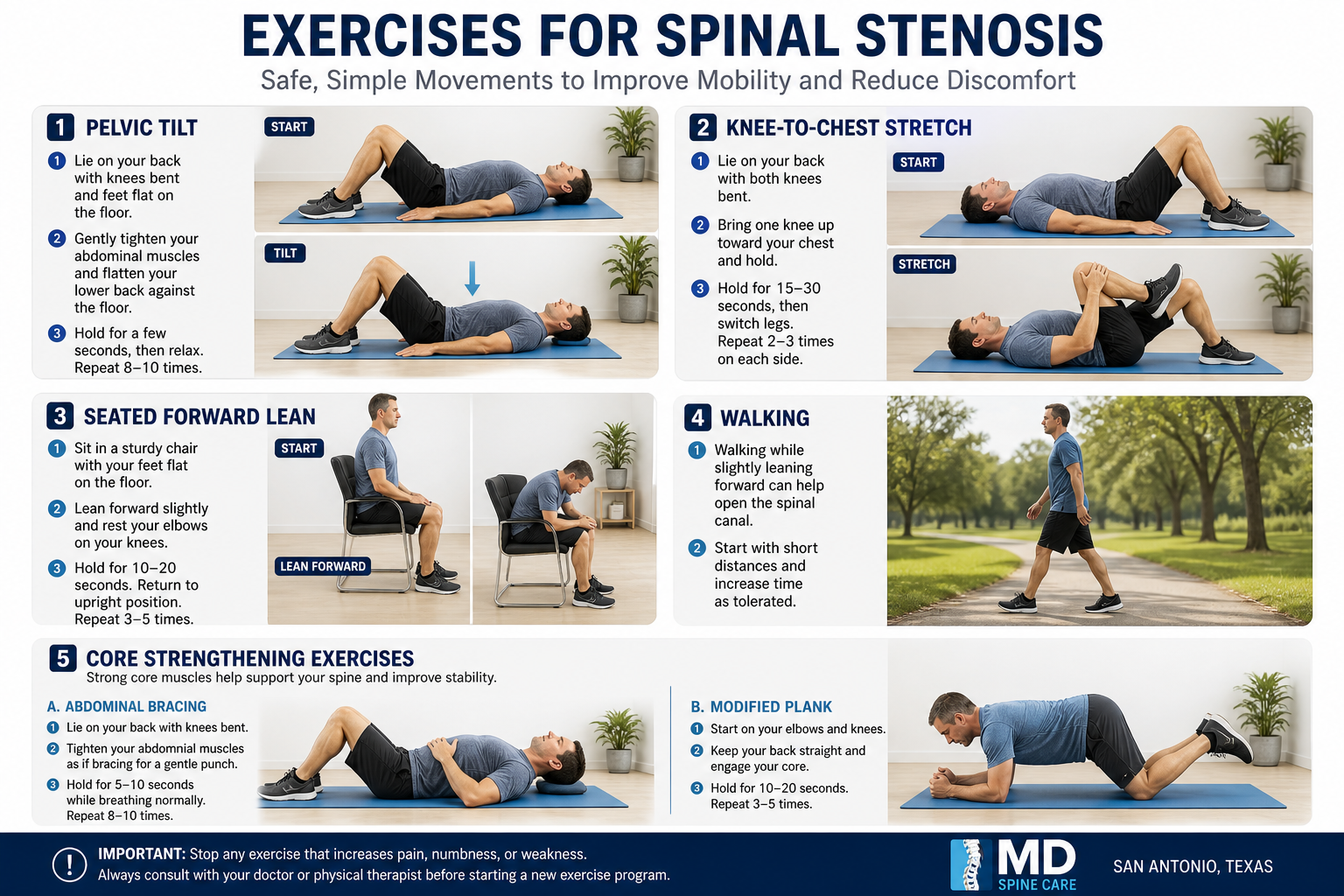
Recommended Exercises for Spinal Stenosis
1. Pelvic Tilt
This exercise helps strengthen the lower back and core.
- Lie on your back with knees bent
- Gently flatten your lower back against the floor
- Hold for a few seconds, then relax
Repeat several times
2. Knee-to-Chest Stretch
This stretch can help relieve pressure in the lower spine.
- Lie on your back
- Bring one knee toward your chest
- Hold for 15–30 seconds
- Switch legs and repeat
3. Seated Forward Lean
This position may help reduce nerve pressure.
- Sit in a chair
- Lean forward slightly with elbows on your knees
- Hold briefly and return to upright
4. Walking (Flexion-Based Movement)
Walking while slightly leaning forward (such as on a treadmill with incline or using a walker) may feel more comfortable for some individuals with spinal stenosis.
5. Core Strengthening Exercises
Strengthening abdominal muscles helps support the spine.
Examples include:
- Gentle abdominal bracing
- Modified planks (as tolerated)
Exercises to Avoid
Certain movements may worsen symptoms, including:
- Prolonged standing upright without support
- Backward bending (extension-heavy movements)
- High-impact activities
- Heavy lifting without proper form
Avoid any exercise that increases pain, numbness, or weakness.
When to See a Spine Specialist in San Antonio
Exercise can be helpful, but it’s not always enough.
You should consider evaluation if:
- Symptoms are worsening
- Pain interferes with daily activities
- You experience numbness, tingling, or weakness
- Conservative measures are not helping
A proper diagnosis ensures that symptoms are being treated appropriately.
Spinal Stenosis Care in San Antonio
Patients in San Antonio experiencing spinal stenosis symptoms can benefit from a thorough evaluation to determine the source of discomfort.
At MD Spine Care, care is focused on identifying the cause of symptoms and discussing appropriate treatment options tailored to each patient.
Learn more about spinal stenosis and treatment options here:
https://www.mdspinecare.com/spinal-stenosis-san-antonio
Exercises can play a role in managing spinal stenosis symptoms, especially when combined with other approaches. Choosing the right movements and understanding your condition can help improve comfort and mobility over time.
If symptoms persist or worsen, a professional evaluation can help guide the next steps.
Watch & Learn: Spine Health Video Library
Understand your symptoms, explore treatment options, and hear directly from our spine specialists.
Back Pain Causes & Treatment
Spine Treatments & Procedure Options